02
qctddft
An installable command-line workflow for Q-Chem TDDFT post-processing, broadened spectra, spectral-region assignment, and representative-structure clustering.
Computational chemistry · molecular simulation · scientific software
I build molecular models, analyze simulation data, and develop reproducible tools that turn computational output into interpretable scientific evidence.
Selected work
Case studies and software chosen to show the full path from computational question to implementation, analysis, interpretation, and reproducibility.
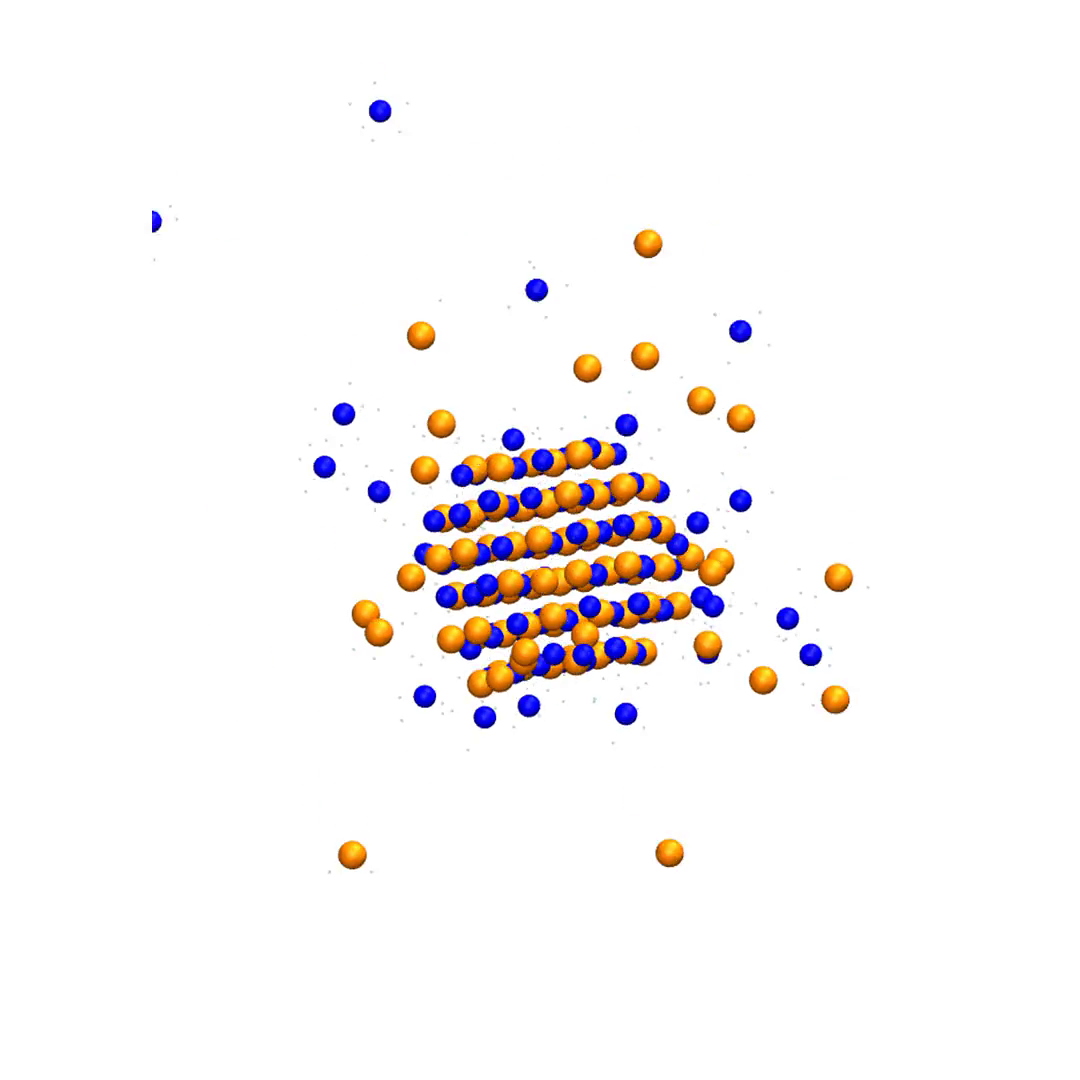
01 · Molecular dynamics case study
Real trajectory media and connected-cluster analysis track progressive surface erosion and ion detachment from a nanoscale NaCl cluster in explicit water.
An installable command-line workflow for Q-Chem TDDFT post-processing, broadened spectra, spectral-region assignment, and representative-structure clustering.
Reusable utilities for molecular-file processing and trajectory analysis, including radial density, hydration shells, and interfacial orientation.
Research practice
Across simulation, electronic structure, and scientific software, I treat model construction, analysis, validation, and reproducibility as parts of the same research process.
01
Solvation, interfaces, structural change, contacts, hydration, orientation, and trajectory-derived observables.
02
TDDFT analysis that connects excited-state calculations, spectra, spectral regions, and molecular geometry.
03
Inspectable Python and command-line tools built around recurring research tasks rather than one-off analyses.
04
Batch-oriented, GPU-enabled, and HPC workflows designed to make computational research repeatable at scale.
Additional public code